Stress and anxiety have become common in today’s fast-paced world, but they can often be managed through healthy lifestyle habits, relaxation techniques, and emotional self-care. While some people may need professional medical support, many individuals experience improvement by exercising regularly, practicing mindfulness, sleeping well, eating a balanced diet, and reducing daily stress triggers. According to Vedic Astrology, spiritual practices such as prayer and meditation may also help create inner calm. At Life Path Solution, we encourage combining practical wellness habits with traditional spiritual guidance to support overall mental well-being.
Table of Contents
Understanding Stress and Anxiety
Everyone experiences stress from time to time.
A busy work schedule, financial concerns, relationship challenges, health issues, or major life changes can all affect emotional well-being.
Stress is generally the body’s natural response to pressure, while anxiety often involves persistent worry or fear that may continue even when there is no immediate danger.
Occasional stress is normal, but long-lasting stress can affect both physical and mental health.
If you’re searching for Natural Ways to Reduce Stress and Anxiety, Stress Relief Tips, Natural Anxiety Relief, Mental Wellness, Healthy Lifestyle, or Life Path Solution, understanding the causes is the first step toward finding lasting relief.
Common Signs of Stress and Anxiety
Everyone experiences stress differently.
Some common signs include:
- Constant worrying.
- Difficulty concentrating.
- Feeling restless or overwhelmed.
- Trouble sleeping.
- Muscle tension.
- Headaches.
- Irritability.
- Low energy.
- Digestive discomfort.
- Feeling emotionally exhausted.
If these symptoms become severe, persistent, or interfere with daily life, it’s important to seek advice from a qualified healthcare professional.
What Causes Stress?
Stress often develops from multiple factors rather than a single event.
Some common causes include:
- Work pressure.
- Financial difficulties.
- Family responsibilities.
- Academic stress.
- Health concerns.
- Major life changes.
- Lack of sleep.
- Excessive screen time.
- Poor work-life balance.
Identifying your personal stress triggers makes it easier to develop healthier coping strategies.
7 Natural Ways to Reduce Stress and Anxiety
1. Practice Deep Breathing
Slow breathing helps calm your nervous system.
Spend five minutes each day breathing slowly through your nose while focusing only on your breath.
2. Move Your Body Daily
Physical activity naturally supports emotional well-being.
Walking, cycling, swimming, yoga, or light stretching for 30 minutes can help reduce everyday stress.
3. Improve Your Sleep Routine
Quality sleep allows your body and mind to recover.
Aim for 7–9 hours of sleep each night and try to maintain a consistent bedtime.
4. Reduce Screen Time
Constant exposure to news and social media may increase stress for some people.
Schedule regular breaks from digital devices during the day.
5. Eat a Balanced Diet
Nutritious meals support both physical and mental health.
Include:
- Fresh fruits.
- Vegetables.
- Whole grains.
- Healthy proteins.
- Plenty of water.
6. Stay Connected With Supportive People
Talking with trusted family members or friends often reduces emotional pressure.
You don’t have to face stressful situations alone.
7. Practice Gratitude
Every evening, write down three positive things that happened during the day.
This simple habit gradually shifts your attention toward positive experiences.
Traditional Hindu Practice for Inner Peace
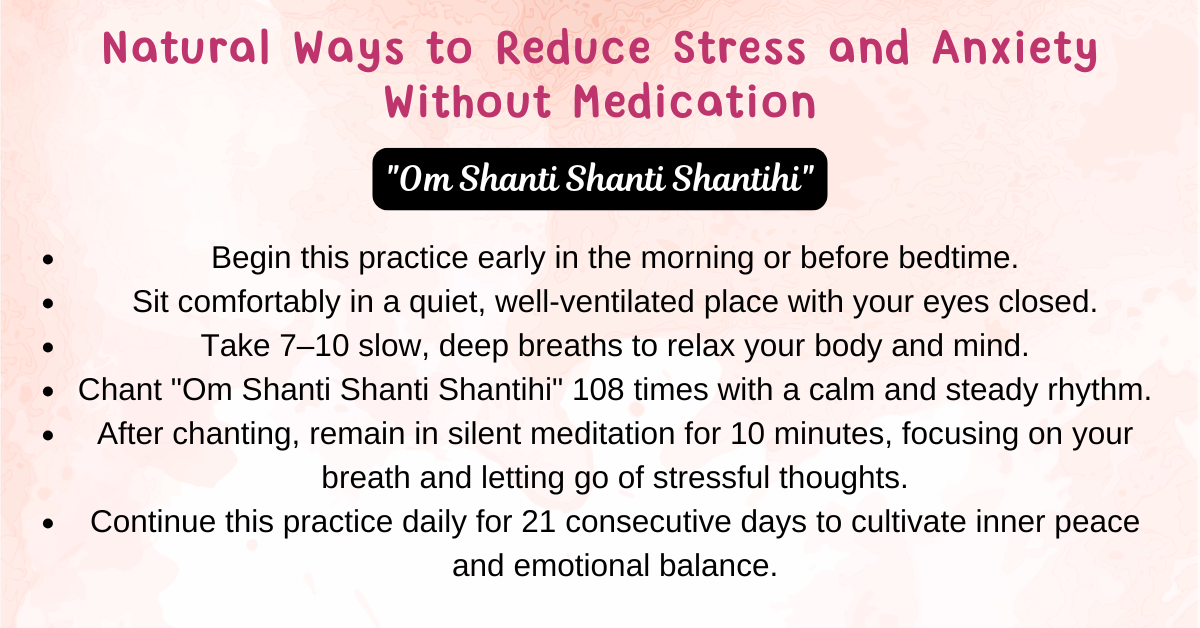
Many people combine healthy habits with spiritual practices to cultivate calmness and emotional balance.
Prayer
ॐ शान्तिः शान्तिः शान्तिः
Om Shanti Shanti Shanti
This traditional prayer symbolizes peace of mind, inner harmony, and emotional balance.
Method
- Practice every morning or evening.
- Sit comfortably in a quiet place.
- Light a diya if you wish.
- Close your eyes and breathe slowly.
- Chant Om Shanti Shanti Shanti 108 times or for 10–15 minutes.
- Focus only on your breathing and the sound of the mantra.
This practice is intended to encourage relaxation and mindfulness. It should complement healthy lifestyle habits and should not replace professional mental healthcare when needed.
Create a Daily Routine That Supports Mental Wellness
Small daily habits often have a greater impact than occasional big changes.
Consider:
- Waking up at the same time every day.
- Spending a few minutes outdoors.
- Drinking enough water.
- Limiting caffeine late in the day.
- Practicing mindfulness or meditation.
- Taking short breaks during work.
- Ending the day without excessive screen time.
Consistency is often more important than perfection.
Expert Insight from Life Path Solution
At Life Path Solution, we believe that emotional well-being is strengthened through a balanced approach. Vedic Astrology may offer spiritual guidance and encourage positive daily practices, while healthy routines, proper rest, physical activity, meaningful relationships, and professional healthcare when necessary remain essential for managing stress and anxiety effectively.
10 Daily Habits That Support Better Mental Wellness
Managing stress and anxiety is not about eliminating every challenge from your life. It’s about building healthy habits that help you respond to challenges in a calmer and more balanced way.
1. Start Your Day Without Checking Your Phone
Many people begin their morning by reading emails, news, or social media notifications, which can immediately increase stress.
Instead, spend the first 20–30 minutes of your day:
- Drinking water.
- Stretching.
- Taking a short walk.
- Practicing deep breathing.
- Planning your day.
A peaceful morning often leads to a more productive day.
2. Spend Time in Nature
Research suggests that spending time outdoors can improve mood and reduce feelings of stress.
Try to spend at least 20–30 minutes in:
- Parks
- Gardens
- Walking trails
- Beaches
- Green spaces
Fresh air and natural surroundings help refresh the mind.
3. Practice Mindful Breathing
When stress begins to build, pause for a few minutes.
Try this simple breathing exercise:
- Inhale slowly for 4 seconds.
- Hold your breath for 4 seconds.
- Exhale gently for 6 seconds.
- Repeat for 5–10 minutes.
This simple practice may help you feel calmer and more focused.
4. Limit Negative Information
Staying informed is important, but consuming negative news all day can increase anxiety.
Choose specific times to check the news rather than scrolling continuously.
5. Stay Physically Active
Exercise benefits both physical and emotional health.
Activities such as:
- Walking
- Cycling
- Swimming
- Yoga
- Dancing
can naturally improve mood and reduce everyday stress.
6. Make Time for Hobbies
Creative activities give your mind a healthy break.
Examples include:
- Reading
- Gardening
- Cooking
- Painting
- Playing music
- Photography
Enjoying hobbies supports emotional balance.
7. Practice Positive Self-Talk
Replace negative thoughts like:
“I can’t do this.”
with healthier statements such as:
“I’m learning and improving every day.”
Small changes in self-talk can gradually improve confidence.
8. Build Healthy Relationships
Strong social connections provide emotional support during difficult times.
Spend quality time with people who encourage, respect, and understand you.
9. Create Healthy Evening Habits
Before sleeping:
- Turn off electronic devices.
- Read a book.
- Listen to calming music.
- Practice gratitude.
- Avoid heavy meals late at night.
A relaxing evening routine supports better sleep quality.
10. Ask for Professional Help When Needed
Sometimes stress or anxiety becomes overwhelming.
Speaking with a qualified doctor, psychologist, or licensed mental health professional is a sign of strength—not weakness.
Professional support can provide effective treatment when symptoms become persistent or interfere with daily life.
Stress Recovery Action Plan
| Time | Healthy Habit |
|---|---|
| Morning | Drink water, stretch, and practice deep breathing. |
| Afternoon | Take short breaks and avoid sitting continuously. |
| Evening | Exercise, walk, or spend time outdoors. |
| Night | Limit screen time and follow a calming bedtime routine. |
| Weekly | Spend quality time with family, friends, or nature. |
Simple routines often create lasting improvements.
Mental Wellness Self-Assessment
Ask yourself:
- Am I sleeping at least 7 hours most nights?
- Do I exercise regularly?
- Am I eating balanced meals?
- Do I spend too much time on social media?
- Do I have someone I can talk to when stressed?
- Do I make time to relax every week?
- Have I considered speaking with a healthcare professional if my stress feels overwhelming?
These questions can help you identify areas where positive changes may be helpful.
Wellness Story – California, USA
A software engineer from California experienced ongoing work-related stress and difficulty sleeping. After consulting Life Path Solution, he adopted a healthier daily routine, practiced meditation, reduced late-night screen time, and improved his work-life balance. Over time, he reported feeling more focused, energized, and emotionally balanced.
Wellness Story – London, United Kingdom
A university student from London felt overwhelmed by academic pressure and constant worry. Through guidance from Life Path Solution, she incorporated mindfulness, regular exercise, structured study schedules, and traditional spiritual practices into her daily life. These changes helped her manage stress more effectively and improve her overall well-being.
Wellness Story – Melbourne, Australia
A business owner from Melbourne struggled with chronic stress while managing multiple responsibilities. After receiving wellness guidance from Life Path Solution, he prioritized sleep, delegated tasks more effectively, practiced daily breathing exercises, and created healthier work habits. Over several months, he noticed greater mental clarity and improved productivity.
Expert Advice from Life Path Solution
At Life Path Solution, we believe emotional well-being is built through balance rather than perfection. Vedic Astrology may provide spiritual insight and encourage mindfulness, but lasting mental wellness also depends on healthy sleep, regular physical activity, supportive relationships, good nutrition, stress management techniques, and seeking professional healthcare whenever needed.
Common Mistakes That Can Increase Stress and Anxiety
Many people unintentionally make daily choices that keep stress levels high. Recognizing these habits is the first step toward creating a calmer and healthier lifestyle.
Ignoring Emotional Well-Being
Many individuals focus only on work, responsibilities, and deadlines while neglecting their emotional health.
Taking time to relax, reflect, and recharge is essential for long-term well-being.
Trying to Control Everything
Not every situation can be controlled.
Learning to accept uncertainty and focusing on what you can influence often reduces unnecessary worry and mental exhaustion.
Poor Sleep Habits
Sleeping too little or maintaining an inconsistent sleep schedule can increase stress and reduce concentration.
Aim for a regular bedtime and create a peaceful sleeping environment.
Skipping Meals or Eating Unhealthy Foods
Your brain needs proper nutrition to function well.
A balanced diet with fruits, vegetables, whole grains, lean protein, and adequate hydration supports both physical and mental health.
Keeping Feelings to Yourself
Bottling up emotions may increase stress over time.
Speaking with a trusted friend, family member, or qualified mental health professional can provide valuable emotional support.
Long-Term Strategies for Better Mental Well-Being
Managing stress isn’t about finding a one-time solution.
It’s about creating healthy habits that support emotional resilience every day.
Focus on these long-term practices:
- Maintain a consistent daily routine.
- Exercise regularly.
- Practice mindfulness or meditation.
- Spend time in nature.
- Continue learning new skills.
- Build supportive relationships.
- Set realistic goals.
- Take regular breaks from work.
- Practice gratitude.
- Seek professional help whenever necessary.
Small improvements made consistently often produce lasting results.
Mental Wellness Checklist
Use this checklist every month to evaluate your overall well-being.
| Question | Yes | No |
|---|---|---|
| Am I getting enough quality sleep? | ☐ | ☐ |
| Do I exercise several times each week? | ☐ | ☐ |
| Am I managing my workload effectively? | ☐ | ☐ |
| Do I spend time with supportive people? | ☐ | ☐ |
| Have I limited unnecessary screen time? | ☐ | ☐ |
| Do I practice relaxation or mindfulness regularly? | ☐ | ☐ |
| Am I eating nutritious meals most days? | ☐ | ☐ |
| Do I seek help when stress feels overwhelming? | ☐ | ☐ |
Regular self-reflection helps you identify areas where positive changes can improve your overall well-being.
Final Thoughts
Stress and anxiety are common experiences, but they do not have to control your life.
Building healthier routines, staying physically active, improving sleep, maintaining meaningful relationships, and practicing mindfulness can significantly improve emotional well-being over time.
At Life Path Solution, we believe that Vedic Astrology may offer spiritual guidance and encourage inner balance, while practical lifestyle habits and professional healthcare remain essential for maintaining good mental health.
If stress or anxiety becomes severe, lasts for a long time, or begins affecting your daily life, work, or relationships, consult a qualified doctor or licensed mental health professional. Seeking help early is a positive step toward recovery and long-term wellness.
Frequently Asked Questions (FAQs)
Q1. What are the best natural ways to reduce stress and anxiety?
Regular exercise, quality sleep, balanced nutrition, mindfulness, deep breathing, supportive relationships, and good daily routines are among the most effective natural approaches.
Q2. Can meditation help reduce stress?
Many people find that regular meditation and mindfulness practices improve relaxation, focus, and emotional balance when practiced consistently.
Q3. Does Vedic Astrology help with emotional well-being?
Vedic Astrology may provide spiritual insight and encourage positive daily practices. It should complement healthy lifestyle choices and professional medical care when needed.
Q4. How much sleep is recommended for better mental health?
Most healthy adults benefit from approximately 7–9 hours of quality sleep each night, although individual needs may vary.
Q5. Can exercise improve anxiety naturally?
Regular physical activity may help improve mood, reduce everyday stress, and support overall mental well-being as part of a healthy lifestyle.
Q6. When should I seek professional help for stress or anxiety?
If symptoms become severe, continue for several weeks, interfere with work or relationships, or cause significant distress, consult a qualified healthcare professional.
Q7. Which foods support emotional well-being?
A balanced diet that includes fruits, vegetables, whole grains, lean proteins, healthy fats, and adequate hydration supports overall brain and body health.
Q8. Can breathing exercises really help?
Slow, controlled breathing may help activate the body’s relaxation response and reduce feelings of stress in many people.
Q9. Why choose Life Path Solution for wellness guidance?
Life Path Solution provides personalized Vedic Astrology, spiritual guidance, lifestyle recommendations, and traditional Hindu wellness practices designed to support overall well-being alongside practical self-care.
Q10. What is the most important habit for maintaining long-term mental wellness?
Maintaining a consistent routine that includes healthy sleep, regular exercise, balanced nutrition, meaningful relationships, mindfulness, and continuous self-care provides a strong foundation for emotional well-being.
About Life Path Solution
Life Path Solution offers personalized guidance through Vedic Astrology, Health & Wellness Consultation, Stress Management Guidance, Lifestyle Advice, Career and Relationship Astrology, and traditional Hindu spiritual practices. We proudly assist clients across India, USA, UK, Canada, Australia, New Zealand, Singapore, UAE, and Europe, helping individuals create greater balance, confidence, and overall well-being.


Leave a Reply